

The Dene Nation, encompassing the Dene-speaking Indigenous peoples of the Canadian Northwest Territories, represents one of the richest cultural and historical tapestries in North America. From their ancient origins in the boreal forests and tundra to their encounters with European settlers and their contemporary political and cultural resurgence, the Dene Nation’s story is one of resilience and profound connection to the land.
Prehistory and Arrival in the Northwest Territories
The history of the Dene Nation stretches back millennia, with archaeological evidence suggesting their ancestors migrated from Asia via the Bering Strait during the last Ice Age, approximately 12,000 years ago. These early migrants spread across the vast landscapes of the Subarctic, adapting to the harsh environment through hunting, fishing, and gathering. Key archaeological sites, such as those near Great Bear Lake, highlight the Dene’s ingenuity and deep connection to the land (Greer, 1997).
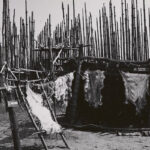
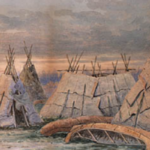
Their migratory lifestyle revolved around seasonal patterns. Caribou provided not only sustenance but also materials for clothing and shelter. The Dene developed intricate oral traditions and spiritual practices centered on their relationship with the land and its creatures, reflecting an ethos of respect and reciprocity.
First Contact with Europeans
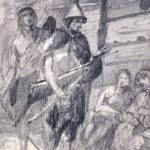
The Dene’s first contact with Europeans began in the late 17th century, through the expansion of fur trading networks led by the Hudson’s Bay Company. The establishment of trading posts along key waterways, such as the Mackenzie River, introduced the Dene to European goods like firearms, metal tools, and textiles. While trade offered new opportunities, it also brought devastating consequences, including exposure to diseases such as smallpox and measles, which decimated Indigenous populations (Sandlos & Keeling, 2021).
Missionaries followed traders, seeking to convert the Dene to Christianity. Despite these efforts, many Dene communities maintained their spiritual beliefs or blended Christian practices with their traditional worldview, demonstrating remarkable cultural resilience (Kristensen & Davis, 2015).
Relationships with Settlers and the Canadian Government
The relationships between the Dene and European settlers were complex and often fraught with tension. While trade fostered economic ties, the imposition of colonial governance systems and land treaties created deep divisions. The signing of Treaty 8 (1899) and Treaty 11 (1921) aimed to formalize relations between the Crown and the Dene, but these agreements were often misunderstood or misrepresented by colonial authorities.
The Dene’s traditional way of life was further disrupted by the Canadian government’s assimilation policies, including the establishment of residential schools. Many Dene children were forcibly removed from their families and sent to these institutions, where they faced neglect, abuse, and cultural suppression. The intergenerational trauma caused by these policies continues to affect Dene communities today (Muckle, 2011).
The Dene Nation’s Fight for Recognition
The 20th century marked a period of political awakening for the Dene Nation. In the 1970s, as large-scale resource extraction projects threatened their lands, the Dene organized to assert their rights. The Mackenzie Valley Pipeline Inquiry, led by Justice Thomas Berger, became a turning point. The inquiry brought national attention to the Dene’s concerns about environmental degradation and cultural survival, ultimately halting the project and reinforcing the need for Indigenous consultation in resource development (Sandlos & Keeling, 2021).
In 1975, the Dene Nation formally established itself as a political organization to advocate for land claims, self-determination, and cultural preservation. Their efforts culminated in the signing of the Tłı̨chǫ Agreement in 2005, which granted self-governance to the Tłı̨chǫ people, a Dene subgroup, and set a precedent for future negotiations.
Contemporary Dene Society
Today, the Dene Nation is a symbol of resilience and innovation. Language revitalization is a central focus, with programs designed to teach Dene languages to younger generations. Cultural initiatives, such as traditional hunting camps and storytelling festivals, reconnect youth with their heritage and ensure the transmission of traditional knowledge.
Environmental stewardship remains a cornerstone of the Dene Nation’s governance. Collaborating with researchers and policymakers, the Dene integrate traditional ecological knowledge with scientific approaches to address issues such as climate change and wildlife conservation. Their leadership in protecting caribou herds and water systems underscores their commitment to sustainable development (Kristensen & Davis, 2015).
Economic development has also become a priority. The Dene Nation has embraced opportunities in tourism, renewable energy, and infrastructure projects, ensuring that these initiatives align with their cultural and environmental values.
Conclusion
The history of the Dene Nation is one of profound connection to the land, resilience in the face of adversity, and determination to shape their future. From their ancient roots in the Subarctic to their encounters with European settlers and their emergence as leaders in Indigenous governance, the Dene have navigated immense challenges while preserving their cultural identity. Their story is a testament to the strength of Indigenous peoples and their vital contributions to Canada’s heritage.
References
- Greer, S. C. (1997). Traditional Knowledge in Subarctic Archaeology. Canadian Anthropological Journal.
- Kristensen, T. J., & Davis, R. (2015). Indigenous Adaptations and Resilience. Routledge.
- Muckle, R. J. (2011). The First Nations of Canada: An Anthropological Overview. UBC Press.
- Sandlos, J., & Keeling, A. (2021). Mining Country: A History of Canada’s Mines and Miners. University of British Columbia Press.